AI phone answering for roofers
The day after a hailstorm your phone rings more than it does in a normal month. Someone has to pick up every call.
The storm-day phone problem
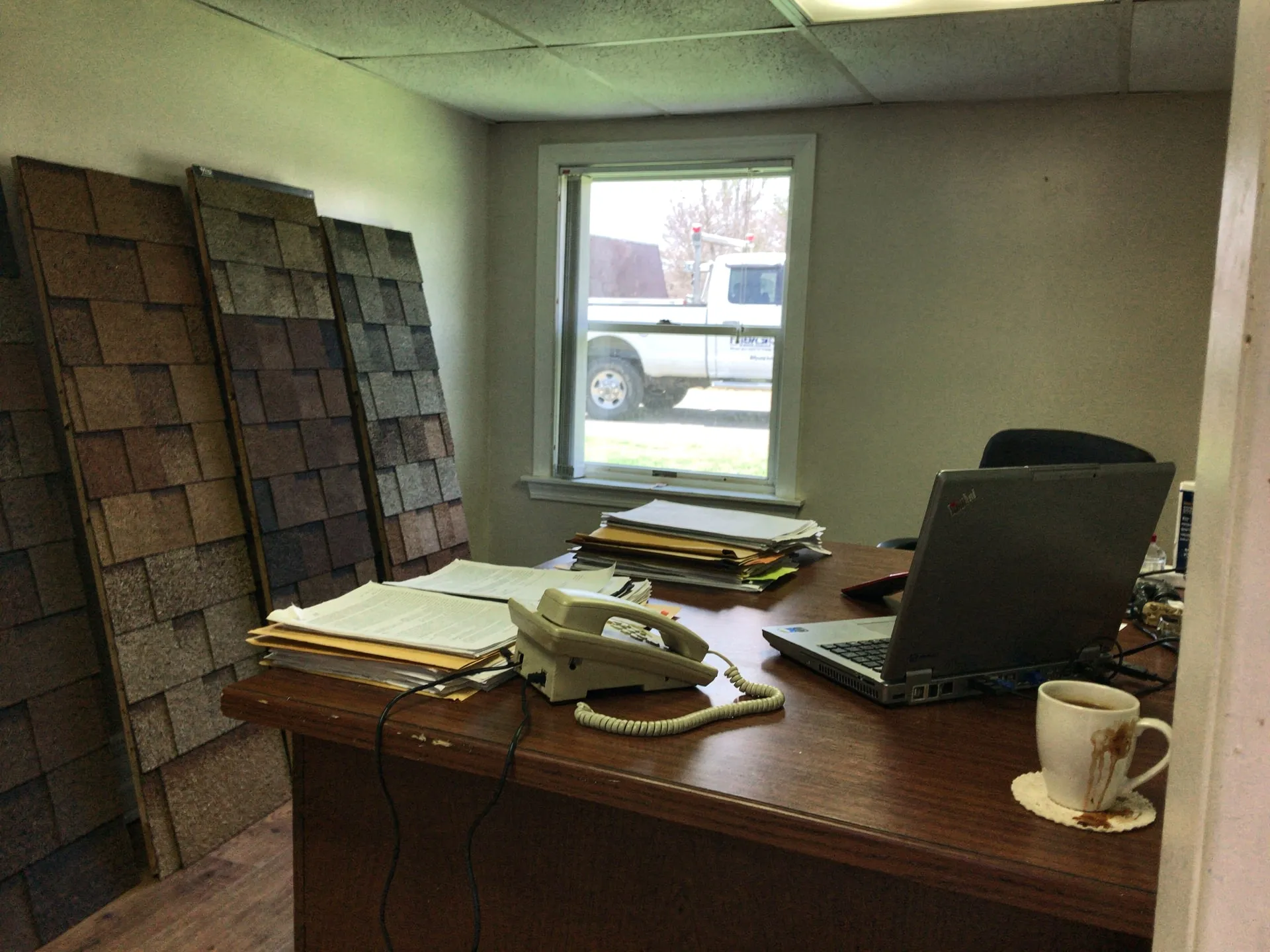
Ask any roofer in Kansas City what the morning after a big hail night sounds like. Crews are on roofs, the estimator is in a driveway, and the office line won't stop. Callers who reach voicemail rarely leave a message. They tap the next roofer in the results.
A voice receptionist takes the overflow, or every call after hours, so the ranking and ads you paid for don't end at a busy signal.
What it is, plainly
It is an AI voice agent on your number. It opens by saying it is an automated assistant for your company, speaks naturally, asks the questions your office would ask, and books inspections into your calendar. It never pretends to be a person, and any caller can ask for a human.
It runs on a third-party voice platform. We set it up, write its script from your real calls, connect it to your calendar and CRM, and adjust it as the calls come in.
How it handles each kind of call
Roofing calls fall into a handful of types, and each needs different questions. The script branches by job type.
Active leaks
It takes the address, where the water is showing and whether a tarp is needed, then texts your on-call person at once with the details. The caller hears plainly when to expect a callback.
Storm and hail inspections
It records the address, the storm date, whether a claim is open and with which insurer, then books a slot. In Oklahoma City or Dallas-Fort Worth, where one storm can fill a calendar for weeks, it gives the caller the true next opening instead of a vague promise.
Replacement quotes
Roof age, current material, what they're considering, and how soon they want it done. The estimator walks into the appointment already knowing whether it's a shingle job or a metal conversion.
Commercial roofs
Building type, rough size in squares if the caller knows it, and who manages the property. These go straight to your commercial estimator rather than the residential calendar.
What it takes and what it hands off
| Handles on its own | Passes to your team |
|---|---|
| Booking inspections | Price on a specific roof |
| Checking the caller is in your service area | Complaints and disputes |
| Claim basics: insurer, storm date | Anything about a claim decision |
| After-hours leak details | The repair itself |
Every call is recorded and summarized, so you can see what was said.
Getting it live
- 1
Listen
Recordings of past calls or an hour with whoever answers your phone now.
- 2
Script
Questions, branches and handoff rules for each call type.
- 3
Connect
Calendar, CRM and text alerts to the right people.
- 4
Test
We ring it with awkward calls before a customer ever does.
- 5
Go live in stages
Overflow first, then after-hours, then whatever you choose.
Common questions
What does it cost?
Setup and tuning are scoped and priced once the free audit is done. On top of that, the voice platform charges its own monthly fee, usually tied to call minutes, and you see it before you sign.
Will callers know it's AI?
Yes. It says so in its first sentence. Some states require that disclosure, and it is the honest way to run it anyway.
How many calls went to voicemail last storm?
Call tracking in the free audit shows the missed calls and when they happened.
Get a Free Audit Ask us something first
Free, and nothing to sign. Your request goes to a human on our side.