Websites for roofing companies
A roofing website has one job: turn a worried homeowner into a booked inspection before they dial the next name.
What a homeowner checks before calling
They look for three things, roughly in this order. Do you work in their town? Have you done a roof like theirs? Can they trust you with an insurance claim? A site that answers those fast keeps the visitor. One that opens on a slider and a mission statement sends them back to the results.
Most roofing sites we audit were built as brochures. A working one is the place every ad, review and map listing points to, and it gets judged on inspections booked, not on how it looks in a pitch meeting.
Built into every site
- A mobile layout with tap-to-call pinned in the header
- An inspection form short enough to fill in on a roof ladder
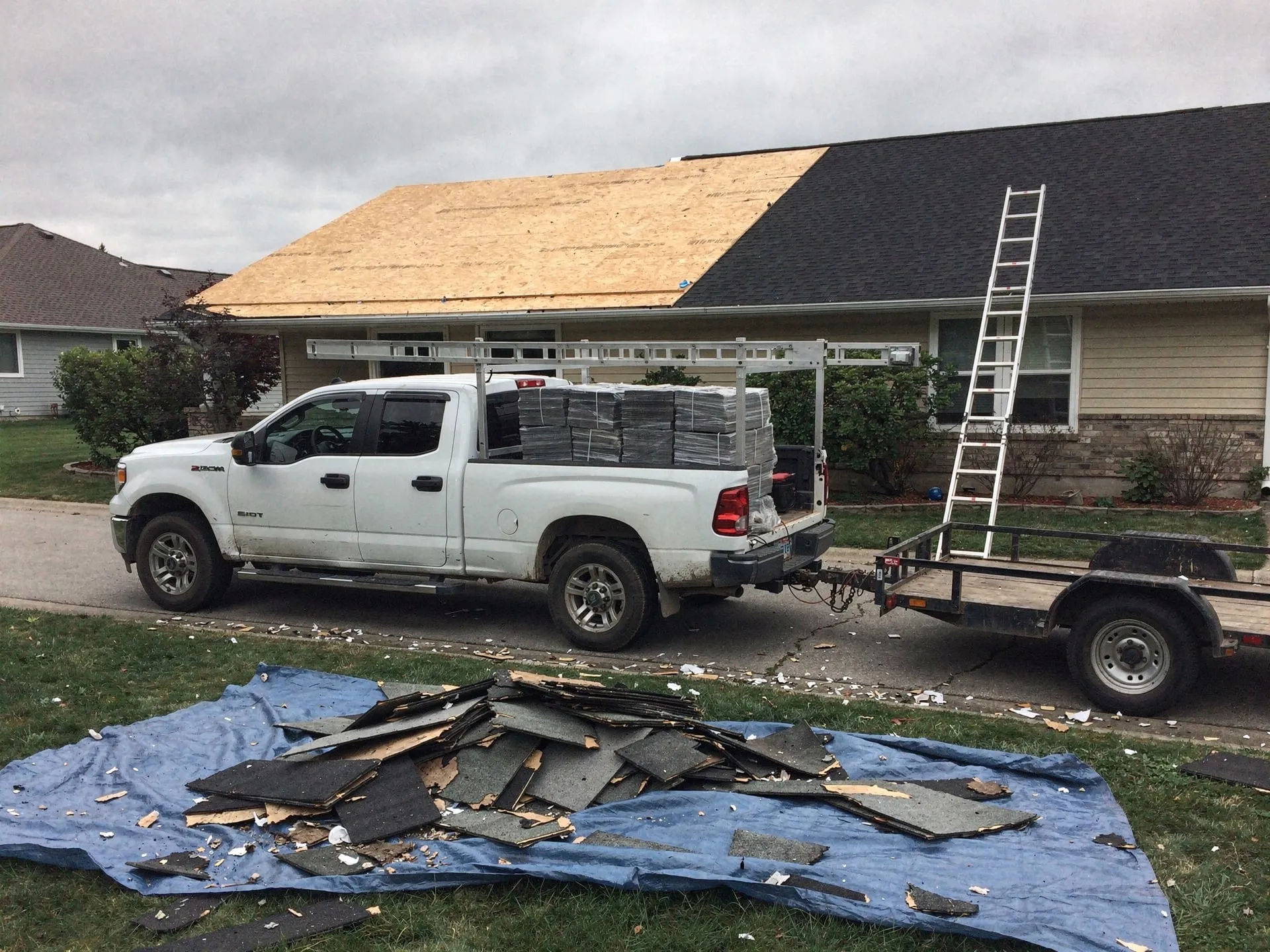
- Your crew, your trucks and your finished roofs instead of stock images
- Service area pages only for towns you really work
- Local business and service schema so search engines read the page right
- Fast loading on a weak phone signal
- Call tracking and form tracking from launch day
- The domain, the site and the content stay yours
Pages a roofing site needs, job type by job type
Each kind of job brings a different visitor with a different worry. A page per job type lets Google match the search and lets the homeowner see their own situation on the screen.
Storm and hail damage
What to look for, how your inspection works, close-up photos of hail hits on shingles and vents. This page has to be live and indexed before the season, not written the morning after. A roofer serving Dallas-Fort Worth or Kansas City wants it ranking by early spring.
Roof replacement
Which materials you put on, what happens on tear-off day, the warranty you really offer, financing if you have it. Material pages follow the region: tile and foam in Phoenix, metal and tile toward the coast around Tampa, architectural shingles almost everywhere.
Repairs and leaks
Short and direct, for the visitor with a bucket under a drip. Phone number first, a few lines on what you fix, photos of patched valleys and flashing. No long reading required.
Commercial roofing
A separate section for flat systems such as TPO, EPDM and modified bitumen, plus maintenance plans. Property managers want proof of insurance and a clear process. Around Chicago, with its flat commercial roofs and short install season, this section often earns its keep on its own.
How a build runs
- 1
Audit the old site
What ranks, which links point at it, which pages bring calls.
- 2
Plan the pages
Job types, materials and towns, agreed with you before writing.
- 3
Write from your jobs
A call with your estimator gives us the details no template has.
- 4
Build and test
Phones, forms, speed and tracking checked on real devices.
- 5
Launch with redirects
Every old address points to its new home so nothing is lost.
Moving off an old site without dropping in the results
If your current site ranks for anything, a careless redesign can erase it overnight. We map every old page to its replacement before launch, so rankings and inbound links carry across instead of vanishing.
Before you rebuild
What does a roofing website cost?
Page count and whether we are moving an old site decide it. You get a written scope and price once the free audit is done, before any work starts.
Can you use photos from my phone?
Yes, and we'd rather. Homeowners spot a fake roof quickly, and your own jobs show the work you really do.
Is your site booking inspections?
The audit walks your current site screen by screen and marks where visitors bail.
Get a Free Audit Ask us something first
Free, and nothing to sign. Your request goes to a human on our side.